Survival: Monster Battle
- 4.3
- Rating
- 50.00K
- Installs
- Free
- Price

 Analysis by App-foxy
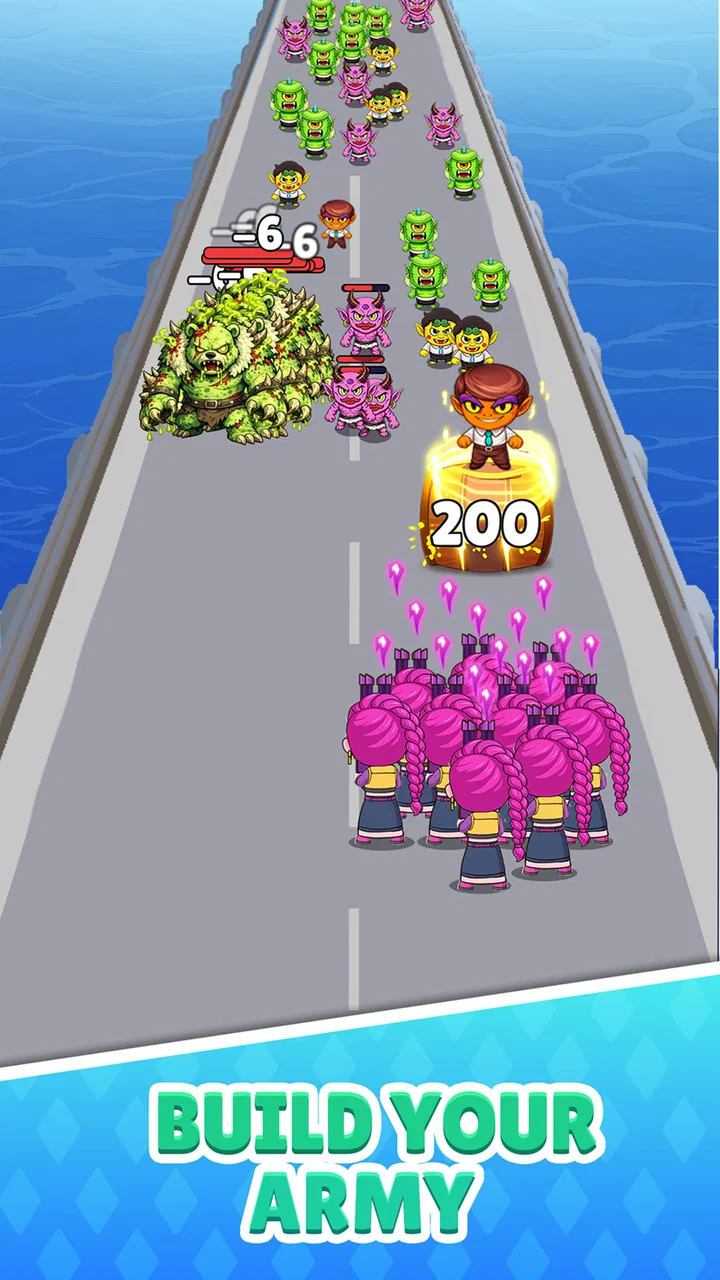
Survival: Monster Battle is a strategy game built around a simple but appealing idea: shape a stage, direct monsters, and try to stay alive while the situation becomes increasingly dangerous. After spending time with it, my main impression is that it works best as a compact tactical experience rather than as a deep, long-term strategy replacement. It has a stylish survival premise, a free entry point, and enough decision-making to make short sessions worthwhile, but its early version also shows why some players may want to wait before treating it as a main game.
What makes the game interesting is the way it places the player between preparation and reaction. You are not simply watching a battle unfold, and you are not only controlling one hero. The stage itself matters, the monsters matter, and survival depends on how those elements are arranged and managed. That gives each attempt a more active feeling than a basic arcade encounter, even when the overall objective is easy to understand.
How the stage-building idea shapes each battle
The strongest part of the experience is the relationship between the battlefield and the creatures moving through it. The game asks me to think about the stage before the pressure becomes overwhelming, then adjust my plan when the monsters make that preparation imperfect. This creates a useful tension: a layout that looks safe at the beginning may become awkward once movement, crowding, or enemy pressure changes the available space.
You May Also Like

 Pandora - Music & Podcasts
Pandora’s Music Is Easy to Start, but Harder to Recover
Pandora’s strength is its low-effort path from a seed to a station. Its weak spot is how much confidence it asks you to place in connection, setup, and quiet recovery.

 8 Ball Pool
 Is Built on Rivalries, Rematches, and Routine
A close look at the rivalries, rematches, shared routines, and unanswered safety questions that turn a quick pool match into a persistent mobile community.

 Samsung Music
’s Quiet Strength Is Playing What You Already Own
Its reach comes less from spectacle than from dependable access to a personal library. That simplicity is both the app’s strongest retention engine and its ceiling.

 AccuWeather: Weather Radar
AccuWeather Review: A Quick, Clear Forecast for Everyday Decisions
For everyday plans, the best forecast is the one you can understand quickly. AccuWeather makes rain timing, radar, and local conditions easy to act on, with a few trade-offs.

 Hill Climb Racing
Why Hill Climb Racing Still Turns Crashes Into One More Run
A tiny car, a bumpy hill and one more upgrade: Hill Climb Racing keeps resurfacing because its simple chaos makes every near-miss feel personal.

 AliExpress - Shopping App
AliExpress Makes Global Shopping Feel Personal, but Shoppers Bear the Risk
AliExpress turns a global marketplace into a pocket-sized discovery engine. Its reach is useful, its shopping loop compelling, and its trade-offs easy to miss.
More From Our News Desk
View All News


I found that the most reliable approach was to avoid treating the stage as decoration. Every decision about where to create breathing room or where to concentrate danger affects how much time I have to respond. That is a more satisfying loop than simply repeating attacks until a progress bar disappears. Even when an attempt ends badly, I can usually identify a planning mistake rather than blaming the result entirely on chance.
The monster-leading element also gives the game its own identity. Instead of presenting survival as a purely defensive activity, it encourages me to consider how creatures can be used as part of the plan. That makes the player feel more like a commander than a lone survivor. The distinction is important because people looking for a conventional action game may initially expect direct combat, while the more interesting decisions here come from managing the whole encounter.
My practical advice is to spend the opening moments observing the stage instead of immediately committing to the most aggressive option. A quick assessment of open space and likely pressure points can prevent a later scramble. I also learned not to make the entire plan depend on one safe area. Once that area becomes crowded, the whole strategy can collapse. Keeping a second route or fallback position is more valuable than building one supposedly perfect setup.
This is one of the game's less obvious strengths: it rewards flexible thinking without requiring a complicated rulebook. I do not need to memorize a large collection of systems to understand why a plan failed. I need to notice where the stage became restrictive, which monsters created the most pressure, and whether I spent my options too early. That makes the game approachable while still leaving room for improvement.
A good fit for short, focused sessions
Survival: Monster Battle feels particularly suitable for the kind of play session that happens between other parts of the day. I can imagine opening it while waiting for an appointment, taking a few attempts during a commute, or playing after work without needing to reserve an entire evening. The strategy is immediate enough to understand quickly, but each failed attempt gives me something specific to reconsider.
In an everyday scenario, I might start a run during a short break and expect to play casually. The first attempt could be exploratory, showing me how the stage behaves and how quickly pressure builds. On the next attempt, I would change one meaningful decision rather than rebuilding everything at once. That approach makes the game more enjoyable because progress comes from learning the encounter, not from mindlessly repeating it.
There is also a useful balance between visual style and tactical attention. The apocalypse theme gives the game a recognizable mood, but the presentation does not replace the strategy. I still have to watch what is happening and make choices based on the current situation. Players who enjoy attractive settings but dislike games that become passive may appreciate that balance.
At the same time, this is not the right choice for someone who wants a large, highly layered strategy campaign. The experience is more focused on survival battles and immediate decisions than on building an enormous empire, managing a detailed economy, or following a long narrative. If your favorite strategy games are complex management simulations, this may feel deliberately light. Its appeal is concentration, not scale.
Where the current version feels limited
The game is currently at version 0.1.5, and that early-stage identity is noticeable in the overall feel. I approached it as a promising work in progress rather than a fully mature strategy package. The central idea is clear, but players who expect a wide range of refined systems from the beginning may find the experience narrower than anticipated.
The main limitation is that the basic survival loop can become familiar once the initial discovery period is over. Building a stage, directing monsters, and reacting to danger are engaging, but the long-term appeal depends heavily on how much variety the player finds in those encounters. If you prefer constant novelty, the focused structure may eventually feel repetitive.
That does not make the game poor; it simply affects who should install it. I would recommend it to someone who enjoys experimenting with a compact tactical idea and does not mind an early version. I would be more cautious with a player who wants a polished, content-heavy game that can serve as a daily mainstay for months. For that audience, a more established strategy title is likely to offer broader systems and a steadier sense of progression.
Another point worth considering is the free-to-play structure. The game is free to download, which makes trying it straightforward, but it includes in-app purchases ranging from around five dollars to around fifteen dollars per item. I would treat those purchases as optional spending rather than part of the initial decision to play. The sensible approach is to test whether the core battle loop is enjoyable before considering any paid item.
This matters because the game's value is not determined only by its price. A free game can still demand time, attention, and patience. In my experience, the best way to judge this one is to ask whether the stage-building decisions remain interesting after the novelty of the monster-apocalypse setting fades. If the answer is yes, the free starting point is attractive. If the answer is no, spending more will not solve the underlying issue.
Small decisions that improve the experience
One useful habit is to separate experimentation from optimization. On the first few attempts, I would deliberately try different stage arrangements even when they seem less efficient. That reveals how much the battlefield influences monster movement and survival pressure. Once I understand those relationships, I can make more deliberate choices instead of copying the first strategy that happens to work.
A second tip is to change only one major variable after a failed attempt. If I alter the stage, the monster direction, and my timing all at once, I cannot tell what actually improved the result. Keeping the adjustment narrow turns each run into a small test. That method is especially helpful for players who enjoy strategy but do not want to take notes or study guides.
A third trade-off involves aggression. Sending pressure toward a dangerous area may create a faster solution, but it can also remove the space needed for a later escape. I found that a slower, more controlled setup is often easier to recover from than an ambitious plan that leaves no fallback. The game becomes more readable when I think about survival in stages: stabilize first, create pressure second, and only then take a larger risk.
These habits are not hidden buttons or advanced menus; they are ways of reading the game's particular structure. They also explain why the title is more strategic than its short description might suggest. The challenge is not just surviving a stylish apocalypse. It is understanding how preparation, monster direction, and available space interact under pressure.
Who should install it
The game is a good match for players who like strategy with a direct objective and short learning cycles. If you enjoy trying a plan, seeing exactly where it breaks, and adjusting it immediately, there is enough here to hold your attention. It is also suitable for people who prefer a lighter alternative to large strategy games that require extensive menus, long campaigns, or constant resource management.
Its Teen content rating makes it more appropriate for older players than for young children, especially those who are comfortable with an apocalyptic monster theme. The game runs on Android version 8.0 or later, so device compatibility is worth checking before downloading. I would not assume that every older phone will provide the same comfortable experience simply because the operating-system requirement is modest; the practical question is whether the device handles the game smoothly during busy moments.
The developer, Brocker Bus Studio, has created a concept that is easy to explain but more interesting to play once the player starts thinking spatially. The title has already passed around fifty thousand installs and holds a 4.3 average from roughly seventy ratings, which suggests that it has found an audience while still remaining relatively small. I would read that as a sign of early interest, not as proof that it will satisfy every strategy fan.
I would skip it if your priority is a deep story, a large roster-management system, or a highly competitive strategy environment with extensive long-term planning. I would also skip it if you dislike repeating encounters to learn their patterns. The game asks for patience with experimentation, and its strongest moments come from gradually understanding why a stage succeeds or fails.
How it compares with familiar strategy alternatives
Compared with traditional tower-defense games, this feels less like placing fixed defenses and waiting for enemy waves to follow a predictable route. The stage itself has greater importance, and directing monsters changes the way I think about control. Compared with real-time strategy games, it is much more compact: there is less emphasis on building a broad economy or commanding a large army across a lengthy map.
It also differs from survival games that focus almost entirely on one character's automatic attacks. Here, the interesting question is not only whether I can react quickly, but whether I prepared the situation intelligently. That makes it a better option for someone who wants survival pressure with a planning layer. On the other hand, players who want constant action and minimal setup may find the tactical pauses less exciting than direct combat.
In other words, this game occupies a useful middle ground. It has the urgency of a survival challenge, the positioning concerns of a strategy game, and the approachable structure of a title designed for quick attempts. Its weakness is the same as its strength: because the concept is focused, it may not provide the breadth that established alternatives offer.
My final recommendation
Survival: Monster Battle is worth trying because its central idea is more engaging than its brief store summary suggests. I like the way it turns stage construction and monster direction into practical survival decisions, and I appreciate that failed attempts can teach me something concrete. The stylish apocalypse setting gives those decisions a clear identity without overwhelming the tactical core.
My recommendation comes with a clear condition: approach it as a focused, early strategy game, not as a complete replacement for every other game in the genre. The free price makes that experiment easy, while the optional purchases mean I would first decide whether the core loop earns my time before spending anything. Players who enjoy compact battles, flexible planning, and learning through repetition should find a worthwhile challenge here.
For me, the final verdict is positive but measured. This is a promising survival strategy game for curious players who value smart positioning over sheer complexity. It is not ideal for anyone demanding a huge campaign or endless variety right away, but it has a distinct enough structure to stand apart from routine monster-fighting games. If you want a short-session strategy experience where the shape of the stage can matter as much as the creatures on it, this is a sensible free download to try.
FAQs for Survival: Monster Battle
01What is the primary objective of Survival: Monster Battle?
In Survival: Monster Battle, the primary objective is to survive against waves of monstrous creatures while completing various missions. Players must strategize and use available resources wisely to build defenses, upgrade weapons, and enhance skills to withstand increasingly difficult challenges.
02Does Survival: Monster Battle require an internet connection?
Survival: Monster Battle can be played both online and offline. However, certain features, such as multiplayer modes and in-game events, require an internet connection. Playing offline limits access to these features but still allows for the core gameplay experience.
03Are there in-app purchases in Survival: Monster Battle?
Yes, Survival: Monster Battle includes in-app purchases. Players can buy in-game currency, special weapons, and upgrades to enhance their gameplay experience. While these purchases can speed up progress, they are not necessary to enjoy the game and can be acquired through regular play.
04What age group is Survival: Monster Battle suitable for?
Survival: Monster Battle is rated for ages 12 and up due to its fantasy violence and strategic elements. Parents should consider the game's content and intensity level when deciding if it is appropriate for younger players. The game focuses on strategy and survival rather than graphic violence.
05How can I get the most out of playing Survival: Monster Battle?
To maximize your experience in Survival: Monster Battle, engage with the community, participate in events, and explore different strategies. Regularly upgrading your weapons and defenses, as well as completing daily missions, can enhance gameplay. Joining a team can also provide additional support and resources.
Pros
- Intuitive controls for easy gameplay.
- Stunning graphics enhance immersion.
- Diverse monster types to battle.
- Regular updates with new features.
- Engaging storyline with twists.
Cons
- Occasional in-app purchase prompts.
- Requires constant internet connection.
- Some levels feel repetitive.
- Battery drains quickly on high settings.
- Limited customization options for characters.

Survival: Monster Battle
Gallery